The Real China Story
Revelation 2:9
Speaks to the church in Smyrna, acknowledging their tribulation and poverty, but also recognising their spiritual richness. It addresses the slanderous words of those who claim to be Jews but are, in reality, a synagogue of Satan. This verse offers encouragement amidst suffering, highlighting that true wealth lies not in material possessions but in faith and perseverance, while also exposing the deceptive nature of those who oppose the church, highlighting the spiritual battle the church faced.
A playbook older than the Bible
A century-old playbook, meticulously crafted and refined through real-world events and trials, embodies the accumulated experiences of generations, passed down through time.
Disclaimer
Please be advised that this article is intended solely for informational and educational purposes. While I have taken all reasonable steps to ensure the accuracy and reliability of the information presented, the content reflects my personal experiences, research, understanding, and interpretation of available sources as of the date of the article. Readers are strongly encouraged to perform their own independent research and arrive at their own conclusions.
The Genesis of Zionism
The synagogue of Satan isn’t just a historical footnote; it’s the hidden power structure pulling the strings. We’re talking about old money, intelligence agencies, and billionaire donors masking themselves behind religious symbols while fulfilling a dark agenda. These are not the true Hebrews of the Bible, but the Khazarian Mafia from Eastern Europe, converts to Judaism in the 7th century. They are the ones Revelation 2:9 identifies as the synagogue of Satan, those who falsely claim to be God’s people, are desperate to conceal this truth and strategically manipulating religions for population control. Evidence suggests Zionist-funded corporations invest in training “pastors” to push agendas, not religious duties, with long-term strategies targeting education and religious events to sway public opinion, especially targeting youth.

Unveiling the truth about China has been an emotionally unsettling journey, especially with the growing influence of the “China model” within the United States and many other smaller nations. The realisation of China’s past intertwined with current global events is profoundly shocking. I am filled with both admiration for my ancestors’ unwavering fight for our future, and a deep sadness. This compels me to bring this finding to light, no matter how difficult.
How can we extract wisdom from the past to protect our future? For centuries, these clandestine networks hiding in the shadow, manipulated events through proxies, with ultimate goal of global control seemingly within reach. It’s becoming clear that these issues extend far beyond just a “China problem.” The “China model” appears to be implemented wherever possible, adapting its methods to suit different cultural contexts, proxy requirements, and target goals. The truth is China is a testing ground. If China can be converted successfully, any country can be converted easily.
Whether the primary focus is profits and resources, or turning a nation like Japan into a proxy military force, the underlying methods remain remarkably consistent. This observation is informed by 40 years of personal experience encountering related operatives, dealing with honey pot attacks, ancestral wisdom, and research to gain a deep understanding of China’s history over the last century. I urge everyone to do your own research and draw your own conclusions, wherever you are—the China model will emerge. Complacency will undoubtedly jeopardise the well-being of generations yet to come.
For a detailed look at each timeline segment, please refer to the PDFs provided. To provide different perspectives and clarity within specific contexts, some event duplication is unavoidable, as these events are intertwined. For a quick overview, a brief read is sufficient. However, to fully grasp the nuances, understanding the overall strategy is recommended. All information is publicly available and compiled here for reader’s convenience.
The power dynamics surrounding the British royal family during the opium trade era raise questions about potential external influences on Britain (parallelled to Qing dynasty) which seems to mirror the current US-Israel relationship. My goal isn’t to assign blame, but to understand the patterns of influence and control at play. Examining these historical parallels may offer valuable insights into today’s geopolitics.
A Successful China Model
Opium Trade
China in the 1800s was a self-sufficient, technologically advanced superpower, uninterested in British trade. However, Britain found a solution to their trade deficit: opium. This is the shocking true story of the Opium Wars, a systematic, government-backed drug operation used to break open a sovereign nation. Britain established the largest drug cartel in history. Qing Dynasty Commissioner Lin Zexu was forced to destroy 20,000 chests of opium in a desperate attempt to save his country. The First Opium War marked the beginning of China’s “Century of Humiliation,” resulting in an estimated 15-30 million deaths and widespread opium addiction that devastated families and the nation’s foundation.
The East India Company (EIC) played a central role in the opium trade between British India and China in the late 18th and early 19th centuries. The EIC supplied the opium from India to private merchants who took it to China on vessels often licensed or protected by British interests. The EIC ceded its monopoly in 1833, and the trade was taken over by Sassoons. The Sassoon family built their immense fortune within the framework of the British Empire and were deeply involved in producing opium in India, auctioning it to private traders, and using the profits to finance the purchase of Chinese tea, silk and other goods.
The Chinese triad’s alleged infiltration of the communist party led to a surge in criminal enterprise, mirroring the self-serving nature of the modern Chinese communist party. HSBC, with its origins in managing opium money transfers in 19th-century Hong Kong, now faces accusations of laundering money for organised crime groups like the Chinese triads. This echoes historical patterns of collusion, such as Indian elites cooperating with the British government to force farmers to grow opium, resulting in widespread famine.
Century of Humiliation
Reflecting on China’s “century of humiliation”, one struggles to comprehend the motivations behind the immense suffering inflicted on millions. Current events suggest these actions were not isolated incidents but rather meticulously planned and executed strategies involving extensive networks and resources. Understanding the historical context is crucial to grasping the implications of these events and hopefully preventing the spread of the China Model. Based on my analysis, these covert operations appear to be on track to meet their objectives, potentially by 2030, with the successful rollout of China social credit system.
The “China Model” operates through a calculated and multifaceted approach. It begins with the establishment of criminal networks that serve as proxies, carrying out unscrupulous operations while maintaining a degree of separation. Simultaneously, a carefully constructed pyramid network is used to infiltrate inner circles and recruit from within. often culminating in the use of honey traps to extract sensitive insider information. This information is then leveraged to facilitate personnel replacement, potentially involving the same criminal groups with a proven history of carrying out unconscionable acts. A prime example of this can be seen in the connection between Lou Taylor and Rob McCoy in the Charlie Kirk situation, highlighting the potential consequences of this model.
The theory posits a correlation between the Qing dynasty’s decline and the Sassoons’ arrival. The Sassoons, part of a broader network, capitalised on the post-first Opium War environment, which forced open limited China ports for foreign trade. With China’s open ports, the Sassoons established a foothold in China, potentially influencing Qing dynasty’s trajectory. The initial phase of the Sassoons’ playbook, involving enlisting local bandits to manage grassroots operations in China, led to the emergence of the Green and Red Gangs, the precursor to the “Chinese Triad.” Overall control was maintained through established local networks to conduct opium distribution, extortion, debt entrapment, and the instigation of violence to foster chaos and fear. The recruitment of local bandits to establish militia groups is evident in various regions, where these groups often possess consistent weapon supplies and structured activities. In Japan, the samurai spirit made them the ideal candidates for a proxy military force with the establishment of Shōwa Statism (Japanese fascism), a political ideology that dramatically reshaped the nation’s trajectory. The Sassoons, exploiting Qing court vulnerabilities, employed systemic infiltration, corruption, and division, mirroring historical strategies like the Rothschilds’ pyramid global network influence. After establishing themselves in China, the Sassoons accumulated wealth via the opium trade, utilising local criminal networks to conceal their operations, indicating a well-organised and influential network.
The Sassoons and its Impact on China (1844-1949)
The real history of China is inextricably linked to the Sassoons, a Jewish family originating from Baghdad. This family, operating with a global clandestine network, wielded considerable influence across Asia. Their involvement in the opium trade had a profoundly detrimental impact, significantly weakening China in the years leading up to the 1911 revolution (辛亥革命).
While the Sassoons didn’t initiate the opium trade, their role was to boost the opium trade in China. While amassing immense wealth, their activities fuelled addiction and destabilised Chinese society. The opium trade had devastating consequences for the Qing dynasty. Externally, it led to the Opium Wars, which exposed China’s military weakness and resulted in unequal treaties that ceded territories and trade privileges to western powers. Internally, the influx of opium destabilised the economy, corrupted the bureaucracy, and fuelled social unrest, such as the Taiping Rebellion (1850-1864), further weakening Qing dynasty’s ability to govern and maintain order.
In my early childhood history lessons, I learnt that the Qing dynasty often stands out as one of China’s most turbulent periods. Plagued by internal strife and foreign invasions, this era became known as China’s “century of humiliation.” Unlike the abrupt violence of the 1917 Bolshevik Revolution in Russia, which saw the execution of the entire Romanov family after its inner circle profoundly affected by the mystic holy man Rasputin, the Qing dynasty endured a more protracted and insidious form of suffering, beginning with Cixi entering the royal court and marked by the Opium Wars and the growing influence of foreign powers, notably from entities like the Sassoon Network, including Kadoorie, paving the way for a period of warlordism and further instability in China.
BlackRock and Blackstone of the East
The Sassoon and Kadoorie families, played pivotal roles in shaping China’s future; especially in Shanghai and Hong Kong, throughout the late 19th and 20th centuries. The Sassoons, built a vast commercial empire centred on opium, textiles, and maritime shipping. The Kadoories, also of Baghdadi Jewish descent, initially worked within the Sassoon network before independently venturing into finance, utilities, and property. Their combined business activities significantly impacted the region’s development.
In Shanghai, the Sassoon family, under David Sassoon, established warehouses, dockyards, and residential buildings, transforming the city into a global trade centre. Elly Kadoorie, initially allied with the Sassoons, diversified his family’s investments into infrastructure, notably the China Light and Power Company in Hong Kong, beginning a long-term collaboration between the two families in China. Both families significantly shaped China, with the Sassoons’ involvement in the opium trade and the Kadoories’ control over infrastructure development. Even though they left after the Chinese communist revolution, their deep impact on the region’s fate and social structure lives on through Chinese communism.
China'sThe Last Emperor
At the heart of this tumultuous period was Empress Dowager Cixi 慈禧太后 (1835-1908). As the consort of the Xianfeng Emperor 咸豐 (1831-1861), mother of the Tongzhi Emperor 同治 (1856-1875), and adoptive mother of the Guangxu Emperor 光緒 (1871-1908), Empress Dowager Cixi rose to power in China through skillful manipulation and strategic alliances. After the death of the Xianfeng Emperor, Cixi orchestrated a coup with Prince Gong (Xianfeng’s brother). This power grab allowed her to become the regent for the young Tongzhi Emperor, solidifying her position as a dominant figure within the Manchu imperial house and one of the most influential women in Chinese history for nearly half century. Despite initial efforts, including quelling rebellions and initiating reforms, Cixi’s influence grew increasingly conservative. She reversed progressive measures, supported anti-foreign movements like the Boxer Rebellion 義和團運動 , and ultimately contributed to the stagnation of China’s modernisation. While Cixi implemented some reforms later in her reign, the Guangxu Emperor’s death, believed to be by arsenic poisoning, cast a dark shadow over her legacy. Though never definitively proven, suspicion has long pointed toward Cixi as the orchestrator of his demise. Cixi died, a day after the Guangxu Emperor.
With the Sassoon family, driven by profit, backed by a clandestine network with massive resources, significantly contributed to China’s century of humiliation. The opium trade crippled China’s economy, society, and sovereignty, leading to internal conflict, warlordism, and the 1911 revolution, a turning point in China history.
A Tumultuous Transformation China's Path from Empire to Republic
The Warlord Era in China (1912–1928)
This period saw the decline of imperial rule and the rise of various factions vying for control. Driven by leaders like Dr. Sun Yat-sen and Chiang Kai-shek, the KMT strived to unite China and create a strong government during the turbulent Warlord Era (1912-1928). This period coincided with the May Fourth Movement 五四運動 in 1919, a movement that challenged foreign influence and pushed for modernisation. The Treaty of Versailles, signed in 1919, had significant implications for China. Despite being an Allied nation during World War I, China’s requests at the Paris Peace Conference were largely ignored.
China had hoped to regain control of Shandong Province, which had been under German control and later occupied by Japan. However, the Treaty awarded Shandong to Japan, causing widespread outrage in China and fuelling the May Fourth Movement and propelled the rise of the Communism.
A Civil War in the making
The formation of the Chinese Communist Party (CCP) in 1921, inspired by Marxist ideology and the success of the Bolshevik Revolution in Russia, with early Chinese communist leaders sought to address China’s pressing issues of poverty, inequality, and foreign exploitation through socialist revolution.
My hypothesis of the Chinese Communist Party, originally founded by intellectuals with idealistic aspirations have been infiltrated and commandeered by the Chinese Triad. This shift marked a significant departure from the party’s initial principles. The Kuomintang’s (KMT) resistance to Leninist coercion resulted in President Chiang’s son being held under house arrest in Russia for an extended period of 12 years.
The ensuing civil war in 1927, despite the KMT’s initial advantage, was interrupted by the Japanese invasion (1937-1945), a period marked by horrific atrocities such as the experiments conducted by Unit 731 and the Nanking massacre. Marco Polo Incident: Allegations suggest it was a false flag by Mao Zedong to weaken KMT. The idea that Japan acted as an ultra-state proxy military force during World War II and the potential collusion between Chinese communists and the Japanese Imperial Army warrants careful consideration.
While Japan had its own goals, its actions were shaped by various factors, including its alliance with the Axis powers (Nazi Germany and Fascist Italy). Japan’s expansionist ambitions in Asia, fuelled by a desire for resources and regional dominance, along with its abundant weaponry supplies, imply external influences shaped its military conduct during the war.
It appeared that the emergence of Japanese fascism, or Shōwa Statism, a political ideology that developed in Japan during the Shōwa period (1926-1989), a blend of nationalism, militarism, and state control, advocating for a strong, centralised government to direct Japan’s economic and social development and to expand its influence in Asia.
Following Japan’s defeat, the Chinese Civil War reignited, with the CCP capitalising on populace support while the KMT, exhausted from eight years of battling the Japanese imperial army, faced significant challenges. In 1949, the Chinese Communist Party (CCP) won the Chinese Civil War, leading to Mao Zedong’s establishment of the People’s Republic of China as the Kuomintang (KMT) retreated to Taiwan. The rest is history.
Aftermath
Chinese history, as told by the Communist Party, usually focuses on how foreign powers took advantage of China. They tend to avoid talking about specific cases, such as the Sassoon family. Acknowledging the Sassoons’ business in China, their partnerships and the Opium Wars (fought to make China buy opium) goes against the preferred story. The fact that British India relied on selling opium to China and that British courts helped collect opium debts doesn’t fit well with the idea of the Sassoons bringing progress, law, and economic growth to China.
The imperial ambitions of foreign powers in China resulted in significant human suffering, the rise of the Chinese Communist Party brought about a new era of governance, marked by its own form of brutality, further entrenching human suffering and complicating the legacy of China’s tumultuous past. The historical relationship between imperialism and communism profoundly shaped China’s destiny further complicated by the rise of state capitalism.
The Enduring Impact of Chinese Triads on Global Organised Crime
The theory suggests that both the Kuomintang (KMT) and the Chinese Communist Party (CCP) were infiltrated by the Chinese Triads, allegedly initiated and supported by the Sassoon family during the Qing Dynasty. This infiltration had significant repercussions, as triad members gained influence within these political entities, manipulating policies and decisions to benefit themselves and the Sassoons. Their presence within the KMT and CCP led to internal strife and undermined the parties’ integrity. The infamous Chinese Triads became deeply entrenched in Chinese society, controlling illicit activities and expanding their influence nationwide till this day.
The globalisation of crime syndicates underscores the lasting impact of the Triads’ methods on global organised crime, they forging connections with criminal organisations globally, such as the Mexican and Colombian cartels. The Cambodia scam factories exemplify how Chinese triads exert control over smaller nations through local proxies, echoing the strategies used by the Sassoons in their opium trade in China.
The formation of the Modern Golden Triangle
The expansion of Golden Triangle, built a vast network of trafficking of any kind that can turn into profit. Similar to China’s opium trade, which inadvertently paved the way for the rise of communism. Similarly, Deciphering Israel’s geopolitical role (Japan model) requires moving beyond conventional perceptions of a nation-state or conflict zone. Israel operates under a unique logic, and grasping this logic is essential for comprehending the dynamics of the region.
As professor Jiang Xueqin argues that Israel should not be viewed as a traditional nation-state, a moral puzzle, or a religious entity, but rather as a crucial command node in a 21st-century logistics empire. This perspective shifts the understanding of Israel from a polity to a strategic point governing the corridor that will replace or bypass the Suez Canal, controlling the hinge between the Indo-Pacific manufacturing belt and the Mediterranean Atlantic finance belt. This corridor is central to capital, influencing energy prices, data flow, shipping premiums, and AI defence architecture, with China, Russia, and the Gulf states quietly acquiescing due to their economic interests in the corridor. It would be interesting to map out where this corridor fits into China’s Belt and Road Initiative. (Belt & Sea version)
The conflict in Gaza is not a moral tragedy but a brutal precondition for this infrastructural succession, where the global elite are already invested, and the land is written into forward contracts, making it essential to recognise infrastructure over ideology to understand and potentially resist this reality.
My hypothesis on the China Model
The Sassoons pioneered or test ran modern global supply chain management, understanding vertical integration before the term existed. They recognised that controlling infrastructure, ships, warehouses, and banks mattered more than controlling products and that political relationships determined commercial success. These insights shaped modern multinational corporations, influencing more ambitious acts by institutional investment firms today, with their acquisition of established national brands to eliminate competition. This strategic approach to controlling resources and manipulating market dynamics laid the groundwork for the complex globalised economy we see today. (house crisis, inflation etc.,)
They also pioneered (test ran) corporate social responsibility, albeit with problematic motivations. David Sassoon’s philanthropy appears to be strategic reputation management, similar to the Sackler family’s actions during the opioid crisis. The Prince Foundation in Cambodia, established in 2015 by Chairman Chen Zhi under the Prince Holding Group, is a well-known philanthropic organisation in Cambodia, but it is also involved in scam factories that include kidnapping, killing, extortion, and trafficking. These contributions were calculated moves to enhance public image and cover up for their criminal activities, reflecting a broader trend among global elites to use philanthropy as a tool for money laundering, reputation control and tax avoidance. Understanding how foreign merchants operated helps explain how China was economically subjugated, even without full colonisation.
The Sassoons seemed to anticipate the Chinese communists’ triumph leading up in the conclusion of the civil war and made arrangements for their assets in China prior to the Chinese communists taking over, and departed with substantial capital.
In my view, Japan once served as a strategically placed proxy military force in South Asia, a situation mirrors current Middle East dynamics. The creation of militias in smaller nations has become a common tactic worldwide. The success of false flag operations throughout history highlights these ruthless strategies. These strategies often involve opposing sides and the ability to reverse roles, obscuring clear alliances and making identification difficult. This approach is particularly effective when sleeper cells are already embedded much earlier within organisations or inner circles, poised to carry out their agenda with minimal effort. My hypothesis is that the China Model is still alive and functioning, albeit in slightly different variations. The adaptability of these clandestine networks is truly amazing, partly due to their recruitment and grooming of future generations through every means possible, and diminishing existing functional systems by eliminating capable individuals on the opposing side, as exemplified by KMT and Kennedy, and their descendants.
Beyond its military strength, China’s economic expansion allegedly supported by embedded agents within various nations. These agents, including Zionists and Triad members who have transitioned into legitimate roles, are said to influence legislation to favour China’s growing global influence.
The halt in expansion by the shadowy cabal following the conversion of China is purely due to economic factors, as the remaining resources were not profitable. The CIA (the Mossad equivalent) provided substantial funds to acquire experimental data from Unit 731, which involved the reassignment of Unit 731 scientists to various continents to continue their research. This experimental data is believed to be the source of MK Ultra and the Manchurian Candidate program, thought to be behind various viruses, senseless attacks and many successful honey traps.
The Evolving Role of third & fourth generation
Protégé 太子黨
The influence of third and fourth-generation “princelings” is increasingly evident across various key sectors of society. These individuals, often referred to as “Protégé 太子黨“, are assuming positions of power and influence. While some may possess genuine skills and abilities, a significant number owe their advancement to nepotism and familial connections. One striking aspect of this new generation is their perceived arrogance. Personal accounts suggest a level of entitlement and ruthlessness that surpasses previous generations. This behaviour highlights the potential dangers of unchecked power and privilege. The Chinese idiom ”青出於藍而勝於藍”, which translates to “the student surpasses the teacher,” is often invoked to celebrate the achievements of successors. However, in this context, it raises questions about whether this new generation is truly surpassing their predecessors in positive ways, or simply amplifying negative traits.
It’s important to recognise that this phenomenon is not unique to any one country or culture. The rise of proteges, often benefiting from advantageous backgrounds, is a global trend. Examples can be found across the world, where individuals with strong connections and privileged upbringings are rapidly ascending to positions of authority, sometimes at the expense or even the lives of more qualified candidates.



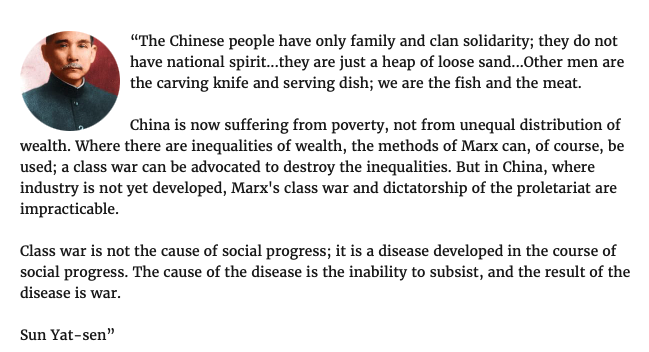
He saw poverty as China's main problem, dismissing Marx's class war as unsuitable for the country's underdeveloped condition.
Though it may take generations and despite the setbacks caused by the Cultural Revolution, it is time for the Chinese people to come together and rebuild the nation for the prosperity of future generations.“
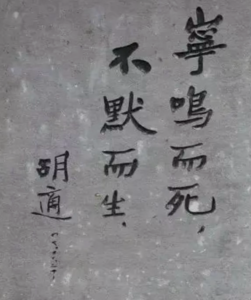
“We remember those who came before us, who laid the foundations of our lives and our communities. We honour their struggles, their sacrifices, and their wisdom. May we be worthy of their legacy, and may we continue to build a better world for generations to come.”
My generation was fortunate to have been raised by a generation full of grace and courage and to have caught a glimpse of their greatness before they faded away.
I hope the Chinese people realise how lucky we were. Without their sacrifices, our lives would be completely different, especially in Taiwan. Without the KMT’s firm stance, Taiwan would have suffered the same fate as the mainland. However, many false flags orchestrated by the CCP in Taiwan have tarnished the KMT’s legacies.
Perhaps these heroes are still watching over us, lending a helping hand from above.
Edited 28th January 2026
Video 1 : @TheDiaryofAceoClips
Video 2: @Jokaqarmy1non X platform
If we fail to act, my generation will be the last to hold the knowledge passed down from our ancestors, leaving the youth of China, and the world with a bleak future. The exploitation of historical events, such as the Holocaust and China’s century of humiliation, serves as a tool to manipulate national pride and control populations.
Understanding these events is important to prevent the repetition of harmful patterns, not to assign blame or dwell on past grievances, but to raise public awareness and build a more informed and secure future for all.
7th January 2026
Video 1 credit: @Chroniclesofwealth222
Video 2 credit: @AudioPointTalks
Video 3 credit: @thedreydossier
Video 4 credit: @LaoWhy86
Video 5 Credit: @LeisRealTalk




The Financial Vulture Model
Powered By EmbedPress
The Financial Vulture Model is more than meets the eye, manifesting in diverse ways to evade detection; stay tuned as we continue to uncover and share new details.
The Real China Story
Timeline
Commodore Matthew Perry (1852-1854)
The Treaty of Kanagawa, (1954)
The Meiji Restoration (1868-1889)
The Battle of the Yalu River 黃海海戰 (1894)
The First Sino-Japanese War (1894-1895)
The Treaty of Shimonoseki (1895)
The Treaty of Portsmouth (1905)
The emergence of Shōwa Statism (1926-1989)
The Mukden Incident (1931)
The establishment of Manchukuo (1932-1945)
The Marco Polo Bridge Incident (7th July 1937)
The second Sino- Japanese War (1937-1945)
Powered By EmbedPress
Nian Rebellion 捻亂 (1673-1681)
The Revolt of the Three Feudatories 三藩之亂(1673–1681)
The Dzungar–Qing Wars 準噶爾之戰 (1687–1758)
Opium Trade (18th Century)
First Opium War (1839-1842)
Sassoons arrived in China (1844-1949)
Taiping Rebellion 太平天國起義 (1850-1864)
Second Opium War (1856-1860)
The death of Emperor Xianfeng (1861)
Powered By EmbedPress
The Self-Strengthening Movement自強運動 (1851-1895)
The Battle of the Yalu River 黃海海戰 (1894)
The First Sino-Japanese War (1894-1895)
Boxer rebellion 義和團運動 (1899-1901)
The Xinhai Revolution 辛亥革命, (1911-1912)
Powered By EmbedPress
Internal uprisings
External opium wars
The Last Emperor of China (1908-1912)
Powered By EmbedPress
The Warlord Era and Nationalist Consolidation (1912-1928)
The establishment of KMT (10th October 1919)
The establishment of Chinese Communist (1st July 1921)
The first Chinese Civil War (1927-1937)
The Marco Polo Bridge Incident (7th July 1937)
The second Sino- Japanese War (1937-1945)
The Tumultuous journey of China's Kuomintang (KMT)
The development of Taiwan
Powered By EmbedPress
The Korean War (1950-1953)
The Great Leap Forward (1958-1962)
The Cultural Revolution (1966-1976)
Deng Xiaoping Economic Reform (1978-1992)
The Tiananmen Square Protest and Massacre (1989)
CCP The Legacy:
• Forced Organ Harvesting trade
• Blood Rejuvenation Therapy
• Enslave of the entertainers by red princelings
• Money Laundering Activities
• The formation of the Modern Golden Triangle
Powered By EmbedPress
Lecture summary by 辛灝年 | Xin Hao Nian
Powered By EmbedPress
Book Recommendations