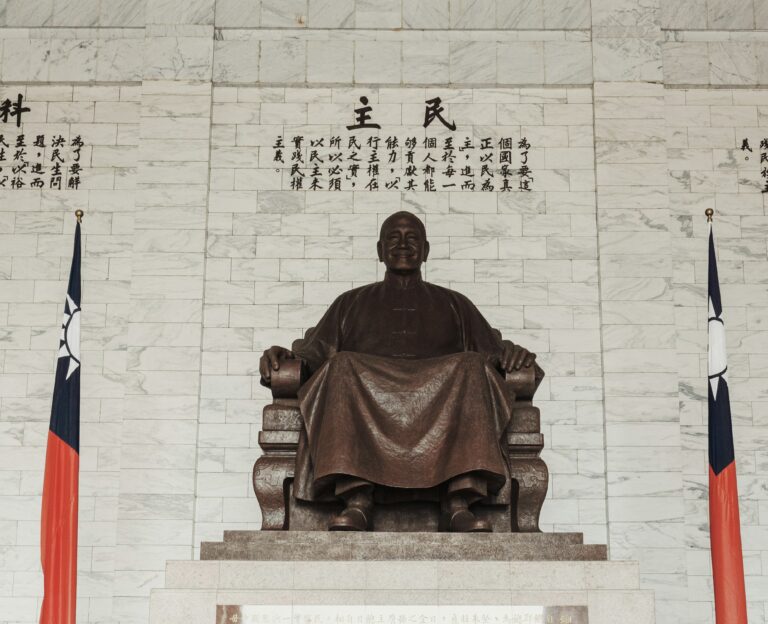
Chiang Kai-shek
Introduction
Writing about this topic has been incredibly challenging due to the complexity and obscurity of events that occurred before my time, pieced together from fragmented accounts, making it difficult to grasp in their entirety. My primary focus is assembling these fragments using my understanding of my ancestors’ defining traits: their strength, stubbornness, and unwavering loyalty to future generations. What I present here are merely glimpses into their experiences, spanning not just one event but the numerous challenges they faced for nearly a century. My hope is that by writing about these experiences, to bring about awareness and contribute to improving the lives of those still suffering.
The Kuomintang (KMT), the legitimate government of China
The Kuomintang (KMT), also known as the Nationalist Party of China, boasts a complex and transformative history deeply intertwined with the modernisation and political upheavals of 20th-century China. Founded by Sun Yat-sen in 1912 from earlier revolutionary societies, the KMT championed nationalism, democracy, and people’s livelihood. After Sun’s death in 1925, Chiang Kai-shek took the lead, guiding the party through the Northern Expedition to unify China and establish a Nationalist government in Nanking.
During the Republican era, the KMT government faced numerous challenges, including warlordism, Japanese aggression, and the rise of the Chinese Communist Party (CCP) supported by Stalin. The Second Sino-Japanese War (1937-1945) significantly weakened the Nationalist government, creating an opportunity for the CCP to expand its influence. Following the end of World War II, the KMT and CCP engaged in a civil war, which culminated in the KMT’s defeat and retreat to Taiwan in 1949.
Initially, Chiang Kai-shek held left-leaning views, but his visit to the Soviet Union revealed that Soviet ambitions and communism were not suitable for China, a realisation that demonstrated his foresight. Later, figures like Chen Duxiu, one of the founders of the Chinese Communist Party, expressed regret, acknowledging that they lacked Chiang’s insightful perspective. The CCP’s aggression persisted beyond this point, as evidenced by the Great Leap Forward and the Cultural Revolution, during which Chinese citizens were prosecuted and local atrocities were committed to perpetuate Chinese communist rule through fear and greed.
Past
The conflicts
The rise of the Chinese Communist was not without foreign influence, transforming China into a crucible for control strategies given China’s geopolitical importance. As I explored in Part I of my book, the collaboration between the Chinese Communist and Stalin suggests a deeper orchestration than mere rural bandits could achieve. The strategic complexities involved imply a hidden network of strategists, evidenced by continuous attempts to dominate China through organised crime syndicates and geostrategies. The Russian Revolution and the murder of the Romanov family parallel with the fall of China’s last dynasty due to drug-induced corruption and internal chaos. This contrasts with Europe’s geopolitical evolution, which led to the rise of Zionist figures like the Rothschilds, who gained significant influence over governmental and financial systems that continues to this day.
Reflecting on my experiences with Chinese communist tactics, I have a theory that Zionist Jews may have instigated revolutionary acts in both Russia and China. By starting within academic circles and then recruiting local bandits, leading to violent revolutions executed with similar strategies in both regions. This may be the origin of the Russian Mob and Chinese Triads, with these tactics now being implemented globally due to the perceived success of the revolutions in China and Russia, completing unfinished business that predates WW I.
In China, during the civil war’s initial phase (1930-1937), the Red Army (mostly local bandits at this stage) employed propaganda, coercion, and terror to control rural areas. Public executions of local leaders and forced conscription were common, creating a climate of fear where compliance trumped genuine support. This intimidation led to near destruction during the Long March for the Chinese Communist, but the Second Sino-Japanese War offered a reprieve. The Japanese invasion allowed the Chinese Communist to regroup and expand, exploiting the KMT’s fatigue after 8 years of fighting the imperial Japanese army, compounded by the horrific news of family members being tortured and killed back home. By the war’s end, the Chinese Communist had transformed from a terror group into a viable force, adapting to wartime conditions while the KMT faltered. Similar tactics were seen in Vietnam, Laos, Malaysia, and Cambodia, with Southeast Asian communists learning from China’s civil war, highlighting the KMT’s greater struggle in China.
Wang Qisheng of the History Department at Peking University highlighted Chiang Kai-shek’s resolve during the war of resistance against Japan, when many officials had lost hope and favoured appeasement. Chiang Kai-shek resisted immense pressure and rejected humiliating peace talks, almost single-handedly supporting the country, displaying a tragic heroism. He persevered with superhuman willpower, leading to victory, the abolishment of unequal treaties, and a place among the world’s top nations and permanent members of the United Nations. As usual, the Chinese Communist then stepped in and took all the credits.
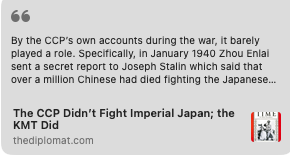
How Mao Zedong's Collusion with the Japanese Army Leaked
Zionists exploit the Holocaust to fuel hatred, mirroring the CCP's use of the Nanking Massacre to sow discord and chaos; both entities mask their own genocidal actions against their people as a tool to maintain power and control.
Stalin’s backing of both the Japanese Imperial Army and Mao’s Communist Party suggests that the Second Sino-Japanese War was a calculated strategy to weaken the KMT by depleting their military strength and resources. The Nanking Massacre, which occurred in the capital of the Nationalist government, served as a warning, the consequences of supporting the KMT government.
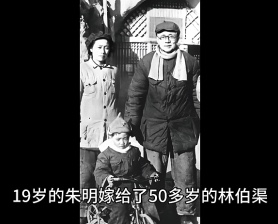
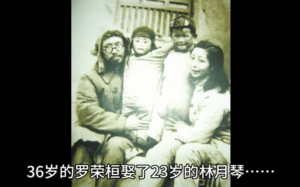
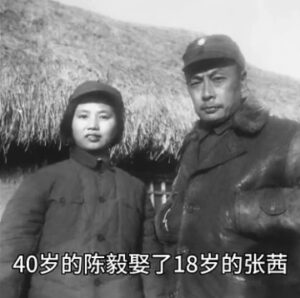
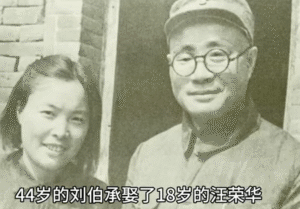
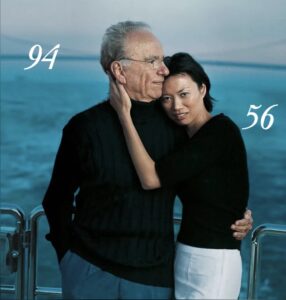
The Chinese Communist presented a carefully crafted image of discipline and respect, yet their actions often told a different story. The song “White Horse Tune,” with its depiction of soldiers behaving deplorably after capturing cities, exposes the darker side of the Red Army, a stark contrast to their altruistic claims. The song featuring the lyrics “When we capture Yulin City, each of us will have a college girl,” reflects a troubling period following Mao’s victory in mainland China. Many of Mao’s revolutionary comrades abandoned their wives to marry young college girls, often as young as 18. These women were often forced into marriage with these much older men. The origin of the second generation of “red princelings” with improved genetics. (eugenic)
This dissonance reveals a deliberate strategy: propaganda designed to conceal the brutal realities of the Chinese communist ascent and to mislead both foreign journalists and urban Chinese, who were far removed from the rural realities. A facade adapted by many Zionist and Communist proxies due to its potency, with manipulation of perception became a powerful tool to gain support and consolidate power globally.

Unit 731
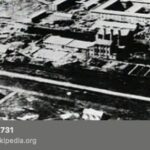
Unit 731, a clandestine biological weapons research and development unit of the Imperial Japanese Army during World War II, was established in Manchuria in the 1930s. Led by Lieutenant General Shirō Ishii, the unit operated under the guise of epidemic prevention while conducting inhumane experiments on prisoners, violating the 1925 Geneva Protocol. Unit 731 was part of a larger network of secret units dedicated to biological warfare, supported by key figures like Colonel Chikahiko Koizumi, with the ultimate goal of developing biological weapons for use against humans.
During World War II, Unit 731 perpetrated heinous human experimentation, primarily in Harbin, Manchukuo. Their horrific experiments included infecting prisoners with fatal diseases, conducting vivisections without anaesthesia, performing forced organ removal, and testing the effects of extreme conditions such as hypobaric chambers. The victims, callously referred to as “logs,” were primarily Chinese civilians, but also included Russians, Koreans, and other nationalities, with women and children among them. The atrocities committed by Unit 731 remain a dark chapter in human history, with no known survivors to bear witness to the full extent of their crimes.
The Japanese military conducted field trials, attacking Chinese cities with plague-infected fleas and spreading typhoid germs in wells and food supplies. These operations resulted in tens of thousands of deaths and widespread suffering. Unit 731 also explored the use of food items as a means of bacterial transmission, contaminating fruits and distributing them to prisoners. The unit’s research led to the development of defoliation bacilli bombs to destroy vegetation, which were used to target agriculture, reservoirs, and other areas. The unit’s activities resulted in an estimated 14,000 deaths within the facility and at least 200,000 more through the deployment of biological weapons in Chinese cities and villages. In 2002, the Tokyo District Court acknowledged Japan’s biological warfare activities in China and recognised state responsibility for the deaths. Following the war, while some members faced trial in the Soviet Union, key figures like Ishii were granted immunity by the United States in exchange for research data. This decision, along with the concealment of the unit’s crimes, remains controversial.
Unit 731’s horrific legacy, which involved the exploitation of Chinese people for inhumane biological agent testing, serves as a stark reminder, the dangers of biological warfare and the potential for global devastation. The atrocities committed by the Imperial Japanese Army that viewed humanity as expendable, drawing eerie parallels with the COVID-19 pandemic and current suspicion of bio contamination globally. Paralleling these large-scale threats is substance-induced psychosis, a global issue with insidious effects, causing significant behavioural changes like disorganised thoughts, memory problems, and emotional dysregulation. These changes can lead to confusion, paranoia, and even violence, potentially contributing to increased violence both domestically and in society. This highlights the multifaceted threats substance/drug-induced psychosis poses to global health and security.
During the Second Sino-Japanese War, the Imperial Japanese Army concentrated its attacks on Kuomintang (KMT) cities, while Chinese communist cities appeared to evade the Imperial Japanese Army’s air strikes. In 1957, Mao Zedong surprisingly invited Saburo Endo, a retired Japanese general who had fought against China in World War II, for a personal visit. This was unexpected because Endo was a relatively low-ranking officer, and Mao even met with him personally, exchanging gifts and stating that Japan’s attack on China was ultimately beneficial to the Communist Party, a sentiment he repeated to visiting Japanese guests for years, including Prime Minister Kakuei Tanaka in 1972, waiving war reparations as a form of gratitude.
The atrocities of Nazi Germany’s chemical weapon development find a chilling parallel in the Imperial Japanese Army’s Unit 731. Both entities engaged in unethical and inhumane experimentation, causing immense suffering and loss of life. While the Nazis focused on developing and deploying chemical agents for warfare and mass extermination, Unit 731 conducted horrific biological warfare research and experiments on human subjects. Both exemplify the depths of depravity to which extremists can sink in the pursuit of military and ideological objectives, leaving a lasting scar on human history.
Present
Iris Chang (張純如)
During my research into the Nanking Massacre for an article on KMT history, I encountered the story of Iris Shun-Ru Chang, an American journalist, historian, and political activist, born on March 28, 1968 to parents who fled mainland China for Taiwan, following the Chinese Civil war and later immigrated to United States, though it was unclear if she has any connection to KMT.
Best known for her book “The Rape of Nanking,” a searing exposé of the Nanking Massacre. Born in Princeton, New Jersey, to Taiwanese American parents, Chang’s formative years in Champaign-Urbana, Illinois, were imbued with accounts of the Nanking massacre, a tragedy from which her maternal grandparents narrowly escaped. She distinguished herself as a prominent voice in historical and social narratives through writing, lecturing, and contributions to various magazines.
Fluent in Mandarin, Ms. Chang travelled to China, where she scoured archives and interviewed elderly survivors. What she learned would force her to describe the indescribable:
“Many soldiers went beyond rape to disembowel women, slice off their breasts, nail them alive to walls,” Ms. Chang wrote. “Fathers were forced to rape their daughters, and sons their mothers, as other family members watched. Not only did live burials, castration, the carving of organs, and the roasting of people become routine, but more diabolical tortures were practiced, such as hanging people by their tongues on iron hooks or burying people to their waists and watching them torn apart by German shepherds. So sickening was the spectacle that even Nazis in the city were horrified.”
She was found dead in 2004, having committed suicide after suffering a nervous breakdown and struggling with depression, assumed to have been triggered by her research and medication. She left behind notes expressing feelings of persecution and fear for her safety. Based on the events leading up to Iris Chang’s tragic death, including her nervous breakdown, hospitalisation, and subsequent medication, there is a possibility that external factors beyond her mental state contributed to her demise. The symptoms she experienced, such as sleep deprivation and extreme depression, coupled with the potential side effects of her medication, raise questions about whether something else, such as poisoning, may have played a role in her mental health. This perspective challenges the conclusion of suicide and the circumstances surrounding her final days. She had left behind some notes dated November 8, 2004:
“There are aspects of my experience in Louisville that I will never understand. Deep down I suspect that you may have more answers about this than I do. I can never shake my belief that I was being recruited, and later persecuted, by forces more powerful than I could have imagined. Whether it was the CIA or some other organisation I will never know. As long as I am alive, these forces will never stop hounding me.”
“Days before I left for Louisville I had a deep foreboding about my safety. I sensed suddenly threats to my own life: an eerie feeling that I was being followed in the streets, the white van parked outside my house, damaged mail arriving at my P.O. Box. I believe my detention at Norton Hospital was the government’s attempt to discredit me.”
It’s hard to believe she would choose such a violent method, a gunshot to the mouth in her car, especially given her access to medication. The act feels deliberate, almost performative, suggesting more than a simple suicide. It’s as if someone wanted to ensure she was silenced in the most definitive way possible.
The Nanking Massacre stands as a horrific event, potentially linked to the broader, sinister agenda of Unit 731. The experiments conducted by Unit 731, though ultimately halted, may have spiralled out of control due to substance (drug)-induced psychosis among those involved. While individuals typically possess a degree of inherent humanity, this can be tragically eroded under the influence of mind-altering substances, potentially another experiment in itself. Iris Chang’s research may have gotten too close to the truth for those shadowy figures operating behind the scenes.
Current affairs in the United States
The United States is currently facing conditions akin to those experienced by the KMT during the Chinese Civil War, with Zionists controlling key sectors of society, including the Federal Reserve. These groups have sleeper cells within these sectors, ready to take action. It is essential to understand true history of the Chinese Civil War, rather than the CCP’s version that glorifies Mao. Examining history allows us to discern patterns and prevent repeating detrimental mistakes.
According to Report on the Chinese Situation to the Third Congress of the Fourth International, by Peng Shuzi. “The Causes of the Victory of the Chinese Communist Party over Chiang Kai-Shek, and the CCP’s Perspectives. Peng Shuzi attributes the CCP’s victory “due to Chiang’s corrupt, collapsing regime, deserted by US. Chiang’s army was weak, filled with unhappy conscripts. CCP’s peasant army seized power amidst economic chaos and popular discontent”. Disturbingly, parallels can be drawn between these conditions and the current state of affairs in the United States, both within the government and at the grassroots level, one might argue that a similar playbook is being playout, reminiscent of the pre-Chinese civil war conditions.
The Epstein phenomenon wasn’t an isolated situation, but rather a complex control mechanism targeting influential figures, potentially hindering their ability to protect their nations. Perhaps it’s time to put it to rest and move forward. People make mistakes, and for the majority, often unknowingly, it’s time to prioritise combating external adversaries instead of engaging in internal conflicts, focusing on the bigger picture of national security and progress considering a silent genocide is occurring in the United States due to the pervasive influx of fentanyl, a crisis fuelled by both the trafficking and consumption of this potent synthetic opioid.
These organised crime syndicates thrive in secrecy. Expose their activities to counter their spread and protect our society. Awareness is the key.
Future
Sun Yat-sen’s Revolution, China’s unfinished business
Sun Yat-sen’s revolution aimed to build a new China based on three principles of the people (三民主義): Nationalism, Democracy, and People’s livelihood. Nationalism involved modernising China’s traditional values rooted in Confucianism, Moism, and Daoism. Sun envisioned a unified China under a central government and a single constitution. Democracy meant establishing a constitutional government with five powers: executive, legislative, judicial, examination, and control, ensuring citizens had rights like election, recall, initiative, and referendum. People’s livelihood focused on infrastructure development, industrial growth, and job creation to improve living standards and balance capitalist growth with social welfare.
Sun’s ideology differed significantly from Marxism-Leninism. While he cooperated with the Communist Party for resources, he rejected historical materialism. The Sun-Joffe Manifesto, signed on January 26, 1923, formalised cooperation between the Kuomintang and the Soviet Union, while clarifying that communism was unsuitable for China and demanding the renunciation of unequal treaties. Sun Yat-sen linked communism to the Confucian concept of “Taton,” (great unity,大同) advocating for class collaboration rooted in traditional Chinese ethics. However, after Sun’s death (a topic for another day), the Chinese communists intensified their activities, ultimately leading to civil war.
After seizing power in 1949, the Chinese communists rebranded themselves as inheritors of Sun’s principles but ignored the five-power constitution. They dismantled rights like recall and referendum, centralising power within the Communist Party. The Cultural Revolution further undermined traditional values by liquidating Confucianism and destroying cultural artifacts. Today, China faces issues like corruption, a “red nobility” class, and confusion among the populace regarding the Communist Party’s direction.
For Sun, nationalism was the driving force, aiming to restore China’s sovereignty and international standing. While the communists also pursued national liberation, their vision was tied to a global proletarian revolution. Sun’s focus was distinctly on China’s unique historical and cultural context, seeking to build a strong, independent nation-state.
Sun Yat-sen’s ideology, encapsulated in the Three Principles of the People—nationalism, democracy, and people’s livelihood—represented a unique blend of Western and Chinese thought, tailored to China’s specific needs. While he cooperated with the communists for pragmatic reasons during a period of national crisis, his core beliefs remained fundamentally incompatible with communism. He was a nationalist reformer, not a communist revolutionary, and his vision for China was one of national unity, regulated capitalism, and constitutional governance.
In Taiwan, the KMT established a government-in-exile and implemented significant economic reforms, transforming the island into an economic powerhouse. Under KMT rule, Taiwan experienced rapid industrialisation and modernisation. In the late 20th century, the KMT gradually transitioned, allowing for greater political participation and eventually relinquishing its monopoly on power. In my view, the modern KMT in Taiwan bears little resemblance to its predecessor, having been infiltrated and effectively reduced to a subordinate entity of the Chinese Communist Party. The original KMT members and their descendants were either purged or assimilated into the CCP structure.
The current state of China is marked by a “red nobility” and a disillusioned populace, manipulated by propaganda and facing structural flaws. Thus, the ideal path forward for China involves constitutionalism, rule of law, and government accountability, as envisioned by Sun Yat-sen’s five-power constitution.
Message of Peace
Nanking, my ancestral home, endured immense devastation during both the imperial Japanese army’s invasion and the Cultural Revolution, resulting in the obliteration of our family tree and history. My father, aiming to protect me from the horrific details, only disclosed that people were shot, beheaded, and buried alive in mass graves. During my research, I was shocked by the details of gruesome cruelty inflicted on defenceless villagers.
Growing up, I felt like a lost soul, constantly encountering hostility that I couldn’t understand, no matter how hard I worked. I attributed it to shyness and a lack of confidence. It wasn’t until later that I discovered my background as a KMT descendant and the indirect attempts by Chinese communists to recruit me, a history I was too young and naive to grasp at the time with choices I made guided by ancestral ethical principles. I am fortunate to have survived and to be able to connecting the dots leading to this day, and by raising awareness, I hope to prevent others from facing similar experiences.
The Nanking Massacre is not an isolated event. A comparable act of mass killing by communists is the Killing Fields of Cambodia, perpetrated by the Communist Party of Kampuchea. The Killing Fields are sites where over 1.3 million people were killed and buried by the Khmer Rouge regime from 1975 to 1979. This was part of the Cambodian genocide, targeting those suspected of connections with the former government, foreign governments, professionals, and intellectuals. This horrific event was depicted in the 1984 film ‘The Killing Fields,” Haing Somnang Ngor, a Cambodian-American physician and survivor of the genocide, won an Academy Award for his portrayal of Dith Pran in the film, later dedicating his life to humanitarian work before his tragic murder in 1996, a crime speculated to be linked to the Khmer Rouge, highlighted the pervasive threat of organised crime and their potential influence within governmental structures.
Part II of my book cover design reflects the theme of the Cambodian Killing Fields, serving as a tribute to the millions who perished under the brutal communist regime. Both events exemplify a pattern of communist operations: upon seizing power, these regimes engaged in mass killings to eliminate perceived adversaries and their descendants, leaving no stone unturned in their quest to consolidate control and suppress any potential resistance.
Proud of my KMT heritage and President Chiang’s legacy of peace, his courage inspires me, and I believe he deserves a posthumous Nobel Peace Prize for his fight to protect China and its people, especially during the eight-year-long war against the imperial Japanese army invasion and constant battling the Chinese communist attacks in the shadows. I long for a future where the world possesses the bravery to champion justice and stand against wrongdoing. If we fail, future generations will inherit a world consumed by fear and devoid of purpose, where greed and vanity overshadow peace, love, and respect.
It is important to emphasise that the behaviour of the Imperial Japanese Army does not reflect its citizens. Likewise, it’s inaccurate to equate all members of any group with specific ideologies or actions, such as assuming all Jewish people are Zionists, or all Chinese people are communists. Even within these extremist groups, many individuals were misled by fabricated stories, fueling their anger and prompting them to take extreme measures to defend what they believed were their rights and the rights of their people. We can only overcome extreme ideologies by standing united.
Coincidentally, August 2025 was the 80th anniversary of the KMT winning the battle against imperial Japanese army in the Second Sino-Japanese War.
24th August 2025

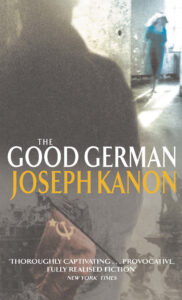
John Rabe, the “Oskar Schindler of China,” was a German businessman who is best known for his efforts to protect Chinese civilians during the Nanking Massacre in 1937 and 1938. Stationed in Nanking as a representative of Nazi Germany within the European-U.S. diplomatic quarter, Rabe also served as chairman of the Nanking Safety Zone. In this capacity, he and other international figures established a neutral zone that provided refuge for approximately 250,000 Chinese people, shielding them from the brutal atrocities perpetrated by the invading Japanese army. His personal diaries, published posthumously “The Good Man of Nanking,” provide a harrowing firsthand account of the massacre and stand as a testament to his courage and humanitarianism in the face of unimaginable brutality. Rabe’s actions saved countless lives and earned him the enduring gratitude of the Chinese people.