October 2023
June 2025

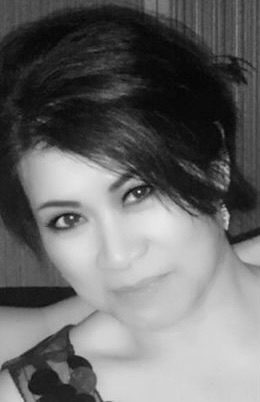
The Author

The truth, like a breath of fresh air, has the power to cleanse and invigorate. It cuts through the noise and reveals the reality of a situation. It may be uncomfortable at times, but it is necessary for growth and progress. Embracing the truth requires courage and integrity. It is a reminder that honesty is the foundation of trust and authenticity. In a world filled with deception and half-truths, speaking the truth is a revolutionary act. It challenges the status quo and demands accountability. The truth may not always be easy to hear, but it is essential for personal and societal transformation. So let us be brave enough to embrace the truth, for it is the catalyst for change and the path to a brighter future for us and our children to come.

Born in Taiwan to parents who fled mainland China after the KMT’s defeat by the CCP, my childhood was carefree and full of promise. However, my encounters with CCP operatives shattered my dreams, and even after moving to Australia, I found myself being followed. Unaware of the history of the Chinese civil war growing up, I learned from my father’s own experience surviving the brutality of the war and Chinese Communist propaganda. Saddened by my parents’ experiences, I count my blessings that they were in the past, without realising the ongoing covert war pursued by the Chinese Communists, which targets not only the descendants of KMT but also the world. My book aims to bring awareness to the world about what is lurking beneath the surface and already affecting many innocent lives. Hopefully, it will awaken the public to come together and fight against “the Axis of evil” that has been ignored for far too long.

The United Front is a political strategy employed by the Chinese Communist Party (CCP). It successfully infiltrated the KMT government on all levels prior to the Chinese Civil War and now exerts influence over countries globally. It aims to build a broad coalition of forces that support the CCP’s policies and goals. The United Front works to mobilise support from different sectors of society, including intellectuals, business leaders, politicians, ethnic minorities, and overseas Chinese. Through the United Front, the CCP seeks to strengthen its influence and promote its ideology, thus creating a network of CCP proxies. 

The Chinese Communist Party (CCP) proxies, such as state-owned enterprises, front organisations, religious groups, and individuals with close ties to the CCP, are strategically deployed to advance the interests and agenda of the Chinese Communist Party. They operate in politics, media, academia, and business, promoting the CCP’s ideology, suppressing dissent, and expanding its global reach. Through their activities, they shape narratives, influence decision-making processes, and further the CCP’s objectives. The mission to free the world from CCP control is both noble and personal, seeking to end the oppressive grip that has long imprisoned the Chinese people physically and psychologically for far too long.

Achieving global peace hinges on overcoming the challenges posed by the CCP and Leninist ideologies, whose influence obstructs international harmony and stability. Their doctrines and practices, which often prioritise authoritarian control and ideological expansion, undermine democratic values, human rights, and peaceful cooperation among nations. Addressing and ultimately defeating these forces is essential for fostering a world where genuine peace can flourish, built on principles of freedom, justice, and mutual respect.

October 2023
Part I, China’s Last Noble Race and their lost generation

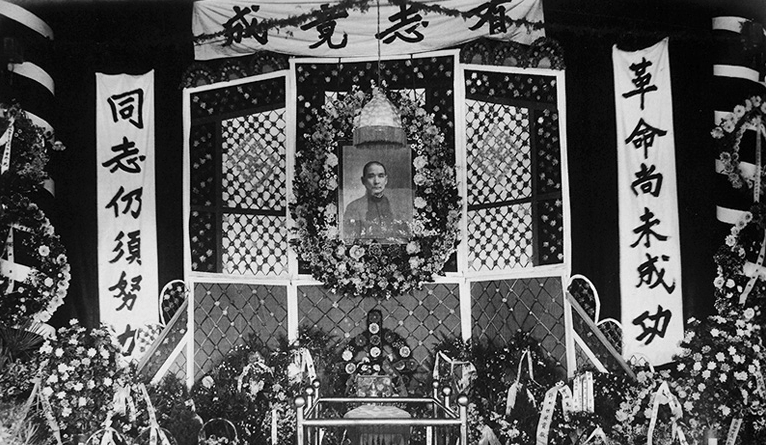
The last noble race in China refers to the Kuomintang (KMT). Initially the ruling party of China, it represented a blend of traditional Confucian values and modern nationalist ideals. Their experiences reflect the broader societal changes that swept through China in the 20th century, as the country transitioned from an empire to a republic and, soon after, a communist state. This period saw the erosion of traditional hierarchies and values with the rise of Marxism-Leninism, leaving the populace displaced and disoriented.

The ascent of the Chinese Communist Party (CCP) and the subsequent civil war saw the KMT eventually defeated and forced to retreat to Taiwan in 1949. This pivotal moment marked a turning point for the descendants of the KMT, who found themselves facing an uncertain future, leading to their dispersion across the globe and their adaptation to a drastically changing world.

The societal changes that followed the communist takeover were profound. Land reforms, collectivisation, and the suppression of dissent dismantled the old order and created a new social hierarchy based on class struggle and revolutionary fervour. The descendants of the KMT, once part of the ruling class, were now labeled as counter-revolutionaries and subjected to discrimination and persecution. Many were forced to abandon their ancestral homes, change their names, and conceal their family histories in order to survive. The loss of status, coupled with the constant fear of reprisal, led to a sense of displacement and disorientation among this “lost generation.”

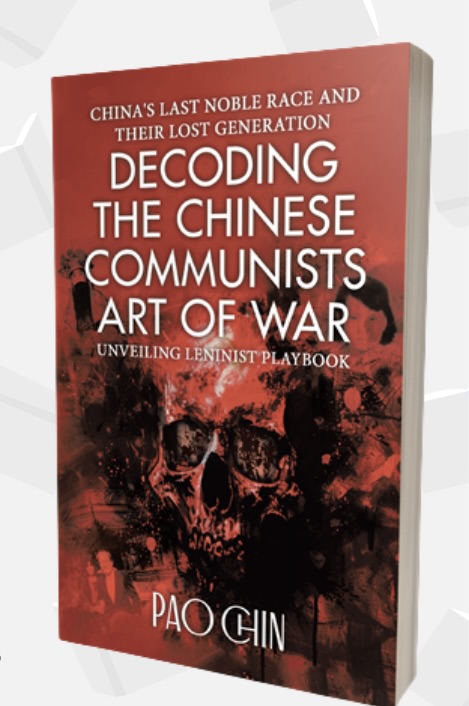
Part II, Decoding Chinese
Communists Art of War

Unveiling Leninist Playbook

The Chinese Communist Party’s (CCP) approach to warfare and strategy is a unique fusion of traditional Chinese military thought and Leninist principles. This blend has profoundly influenced their tactics, organisational structure, and overall methodology for achieving political and military objectives. The CCP’s “art of war” extends beyond mere military strength, incorporating propaganda, psychological warfare, and political mobilisation.

Drawing heavily from ancient texts like Sun Tzu’s “The Art of War,” the CCP stresses understanding the adversary, exploiting vulnerabilities, and avoiding direct conflict when feasible. This strategic mindset is bolstered by Leninist concepts of party organisation, discipline, and ideological mobilisation. The Leninist playbook has been passed down through generations, greatly influencing the princelings: descendants of Chinese communists, second generation of revolutionaries.

This multifaceted approach allows the CCP to adapt to various situations, employing both conventional and unconventional methods to gain an advantage. By integrating military strategy with political and ideological tools, the CCP seeks to achieve its goals through a comprehensive and nuanced approach to warfare.

 The editorial…..

Decoding the Chinese Communist Art of War is looking to be in great shape! 

I have quite enjoyed the time I’ve spent with this manuscript over the past few months. Despite the complex nature of chosen topic and its by nature hidden and embedded influence on global politics and international business models, the author have taken care to expose the deeply buried roots of Chinese communists and Leninists geopolitical machinations in the simplest possible terms, using the most accessible examples to illustrate. The additional information have provided—particularly on touch points of Chinese history and culture—is compact, informative, and will expand reach towards an audience perhaps unfamiliar with the events and conditions enmeshed in Chinese (and Leninist) histories. I have noted that the author has included some updated political and other newsworthy events, particularly as pertains to ongoing US sociopolitical upheaval under the newly elected 2025 Trump administration. This is a wise choice and adds value and interest to the manuscript and will likely intrigue Western readers unfamiliar with the type of power struggles currently unfolding but which have been played out already multiple times in Eastern regions.

The historical examples add weight and insight to these ongoing events. Decoding the Chinese Communists Art of War is a timely offering that serves as a cautionary tale: The free world ignores history at its peril.

7th March 2025

Tiananmen Square Massacre

Now Available

Leave review, help us reach wider Audience!
Music speaks for the voiceless