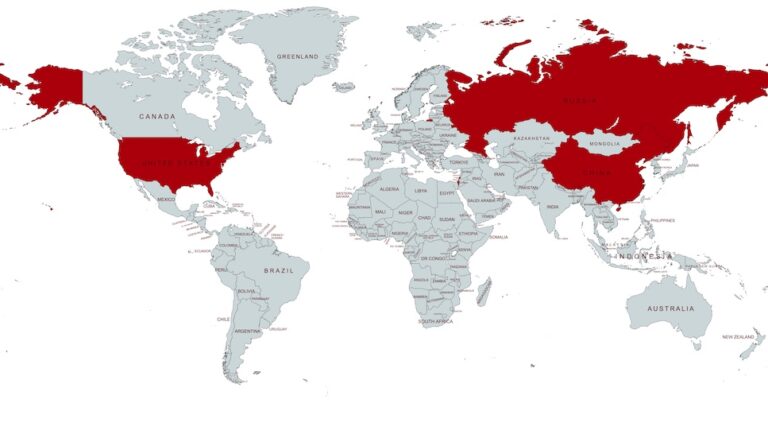
The Global Golden Triangle
The “Global Golden Triangle” theory
suggests a hidden alliance between Communists, Leninists, and Nazionists, united by a common goal to destabilise traditional societies and create a new world order.
Mapping
The Golden Triangle, where Thailand, Laos, and Myanmar converge at the confluence of the Ruak and Mekong rivers, has been notorious since the 1950s as one of the world’s primary opium-producing regions. Its isolated topography and economic hardships fostered drug production, the area’s opium poppy cultivation dates back centuries, but it gained prominence after World War II due to insurgencies, conflicts, and the Vietnam War, during which demand for opium and heroin surged among American soldiers.
The CIA’s backing of anti-communist forces, particularly those remnants in the Golden Triangle unaware of the Vietnam War’s end and who relied on opium to bolster their capabilities, Legend has it that many soldiers remaining from the Chinese Civil War scattered throughout the Golden Triangle from both sides in search of survival thus began the Golden Triangle’s metamorphosis into a premier nexus of drug manufacturing perhaps by design. Post-Vietnam War, the Golden Triangle rose to prominence as a primary heroin source until the early 2000s, when Afghanistan overtook it as the world’s leading producer, its dominance eventually replaced by cheap synthetic opioids under the disguise of pain management.
The Golden Triangle’s legacy extends to the formation of three major global hubs for illicit drug production and trafficking. These include the original Golden Triangle in Southeast Asia, the Golden Crescent in Southwest Asia, and the Andean region in Latin America. These regions are notorious for the production and trafficking of opium, heroin, methamphetamine, and cocaine, contributing to a global crisis of drug addiction, violence, and organised crime, a situation resulting from the collaboration amongst Communists, Leninists, and Nazionists, united by a common goal that can be traced back to the tumultuous periods of WWI and WWII, highlighting the complex interplay of political ideologies and criminal enterprises in shaping the global landscape of illicit activities, the invisible money laundering belt and power grab.
Origin of Nazism
Nazism, officially known as National Socialism, emerged in Germany after World War I, fuelled by extreme nationalism, racism, and antisemitism. Founded by Anton Drexler, Adolf Hitler later took control of the Nazi Party, promising to restore Germany’s former glory and address economic grievances.
The seeds of Nazism were sown in the aftermath of World War I, as Germany faced economic hardship, political instability, and deep resentment over the Treaty of Versailles. The Treaty of Versailles was a peace treaty signed in 1919 at the Palace of Versailles in Paris that officially ended World War I. It was one of the most important and controversial treaties of the 20th century. The treaty assigned Germany responsibility for the war and required Germany to pay massive reparations, cede territory, disarm, and make other concessions. The treaty aimed to ensure lasting peace by preventing Germany from regaining significant military power. However, the treaty’s punitive measures fostered resentment and economic instability in Germany, contributing to the rise of extremist ideologies and ultimately playing a role in the lead-up to World War II.
Hitler, a charismatic orator, skillfully exploited these grievances, promising to restore Germany’s former glory and scapegoating Jews and other minority groups for the nation’s problems. Through propaganda, intimidation, and violence, the Nazis gained power in 1933, establishing a totalitarian regime. They implemented policies of racial purity, persecuting Jews, Roma “the Gypsies”, and other minority groups. The infamous Nuremberg Laws of 1935 stripped Jews of their citizenship and civil, paving the way for their systematic persecution, ultimately leading to the Holocaust.
Under Hitler’s leadership, Germany embarked on a path of aggressive expansionism, annexing Austria and Czechoslovakia before invading Poland in 1939, triggering World War II. The war became a brutal and devastating conflict, marked by unprecedented levels of violence and atrocities, including the Holocaust, the systematic extermination of six million Jews.
The tide of the war turned against Germany in the later years, as the Allied forces gained momentum. By 1945, Germany was in ruins, and Hitler committed suicide in his bunker in Berlin. The Nazi regime collapsed, and its leaders were held accountable for their crimes at the Nuremberg trials. Nazism left a legacy of destruction and horror, serving as a stark reminder of the dangers of extremism, racism, and unchecked power.
Nazi of the East, the Sino-Japanese War
The First Sino-Japanese War (1894-1895) marked a turning point in East Asian power dynamics, with Japan’s victory over China signalling the decline of the Qing Dynasty (by design with Opium invasion) and the rise of Japan as a major military power. This conflict primarily revolved around control over Korea. Decades later, the Second Sino-Japanese War (1937-1945) was a much larger and more brutal conflict, becoming a major theatre of World War II. This war involved widespread atrocities and immense suffering for the Chinese people, ultimately ending with Japan’s defeat and withdrawal from China.
The Second Sino-Japanese War persisted until Japan’s surrender on September 2, 1945. Its roots trace back to Japan’s imperialistic ambitions and expansionist policies in mainland China, following the Marco Polo Bridge Incident, also known as the July 7th Incident (七七盧溝橋事變), was a military clash between the Republic of China’s National Army (KMT) and the Imperial Japanese Army. The conflict took place in Wanping, a town southwest of Beijing, on July 7, 1937. While the details of the initial clash remain disputed, it escalated quickly, leading to a full-scale war between China and Japan, which later became part of World War II.
The conflict was marked by immense brutality, including the Rape of Nanking, and widespread destruction across China. Despite facing a better-equipped and technologically advanced enemy, the Chinese, mounted a fierce resistance under the leadership of Chiang Kai-shek and the Nationalist government resist the technologically superior Japanese forces. Despite initial setbacks and the loss of key cities like Nanking and Shanghai, the KMT adopted a strategy of protracted warfare, trading space for time. This strategy aimed to wear down the Japanese army and exploit its overstretched supply lines. Ironically, it mirrors the strategy the Chinese Communists (CCP) employed against the KMT to ultimately seize power.
The war concluded in 1945 with Japan’s defeat, resulting in the restoration of Chinese sovereignty over territories occupied by Japan, although the internal conflict between the Communists and Nationalists soon resumed. The Second Sino-Japanese War had a profound impact on China, resulting in immense human suffering. It is estimated that 20 million of Chinese soldiers and civilians perished during the conflict. The war also significantly weakened the Nationalist government KMT, paving the way for the Communist victory in the subsequent Chinese Civil War. Furthermore, the war played a crucial role in shaping the geopolitical landscape of East Asia, contributing to the rise of Chinese Communists as a major power in the post-war era.
Nazionism: (Nazism-Zionism)
In 1998, Ayatollah Khamenei stated in a meeting with Roger Garaudy that Iran’s opposition to the United States and Zionism is rooted in principles, not prejudice against Jews. He equates Zionists with Nazis, criticises the West’s support of Zionism as hypocritical. In his 1982 doctorate, later published as “The Other Side: The Secret Relationship Between Nazism and Zionism,” Mahmoud Abbas accuses the Zionist movement of collaborating with the Nazis and supporting the holocaust. Abbas claims that Zionists withheld aid from Nazi victims, suppressed information from ghettos and concentration camps, and obstructed efforts by others to help Jewish refugees. He further alleges that Zionism adopted Nazi selection principles in determining who would be saved and incited hatred against Jews living under Nazi rule to fuel their extermination (Eugenics), which evokes historical parallels with China, recalling the immense loss of life during the Great Leap Forward and the hardships of the Cultural Revolution. This apparent indifference to human life mirrors past atrocities, suggesting a recurrence of similar political constructs and ambitions echoing those of World War II.
The rise of HAMAS mirrors the conditions that once fuelled the ascent of Nazism. Both movements emerged in environments marked by profound socio-economic despair, political instability, and a deep sense of national humiliation. Just as post-World War I Germany grappled with hyperinflation, unemployment, and the sting of defeat, leading to widespread discontent exploited by the Nazis, so too did the Palestinian territories face poverty, displacement, and a perceived lack of political agency, creating fertile ground for HAMAS’s growth. Both movements capitalised on popular grievances, offering a radical vision of restoring national pride and promising a solution to seemingly intractable problems, thereby attracting followers who felt abandoned by mainstream politics; their emergence raises questions about the sources of their extensive weaponry and logistical support, potentially implicating the collaboration among communist, Leninist, and Nazionist, which may explain the failure of the Iron Dome on October 7, 2023.
In the lead-up to World War II, both the Japanese Imperial Army and the Nazi regime perpetrated appalling atrocities against civilian populations; these acts of brutality inflicted irreparable damage, leaving a legacy of broken trust and animosity between nations that would last for generations.
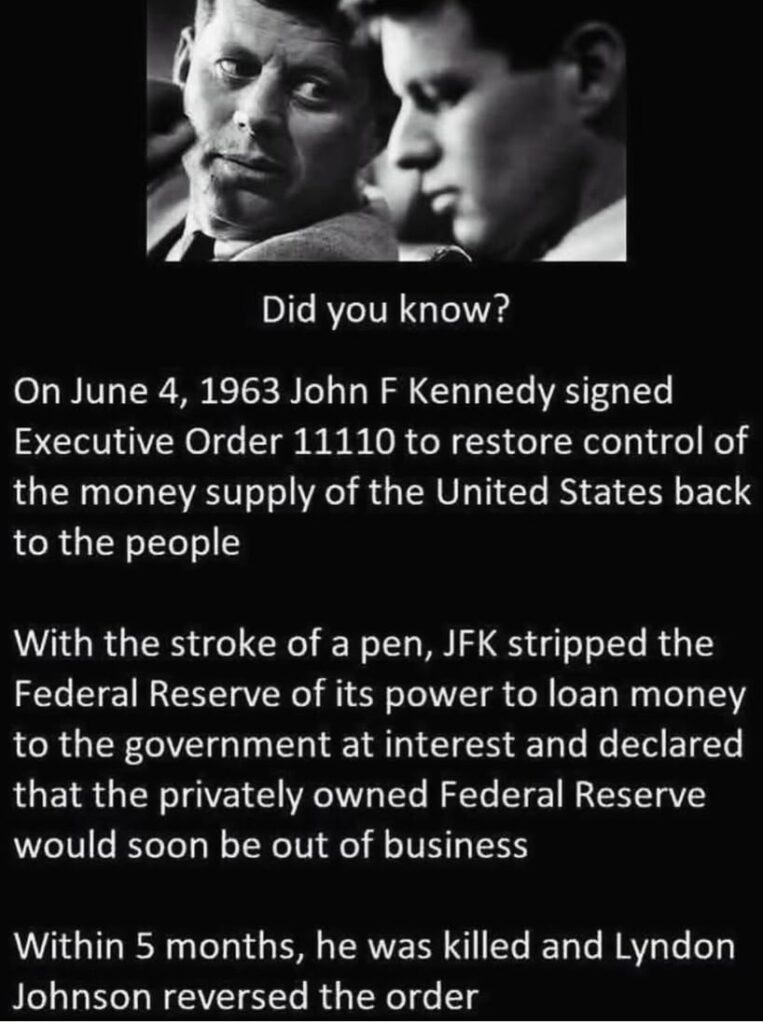
United States Federal Reserve
G. Edward Griffin’s “The Creature from Jekyll Island” presents a thesis: the Federal Reserve is not a benign entity but a tool for economic instability, war, and totalitarianism.
Griffin argues that a clandestine meeting in 1910 on Jekyll Island laid the foundation for the Federal Reserve, a system that allows money to be created from nothing. This power, he contends, is not only incapable of achieving its stated objectives but actively undermines economic stability.
Griffin highlights the dangers of fiat money and the fractional-reserve banking system, asserting that they inevitably lead to economic chaos. Fiat money is a government-issued currency that is not backed by a physical commodity, such as gold or silver, but rather by the government that issued it. The value of fiat money is determined by the supply and demand in the market, as well as the stability and credibility of the issuing government.
Griffin also introduces the concept of the “Mandrake mechanism,” by which government debt is converted into money from NOTHING, further destabilising the economy. The book also delves into the “Rothschild formula,” suggesting that powerful families have historically manipulated geopolitics for financial gain, with the Federal Reserve providing a formidable tool for such manipulation.
Ultimately, “The Creature from Jekyll Island” posits that the Federal Reserve is part of a broader agenda of global socialism. Griffin points to the IMF, World Bank, and the UN as instruments in a long-term effort to establish a world fiat currency and a world government, thus arguing that the Federal Reserve plays a crucial role in a move towards global tyranny. He lists seven reasons to abolish the Federal Reserve, including its private interests, its role in generating inflation, and its tendency to encourage war.
Considering historical context, including covert operations leading up to the Chinese Civil War, a deeper analysis suggests the Nationalist government, Kuomintang (KMT) was never going to win the Chinese Civil War. A decision was made following Stalin’s unsuccessful attempts to convert Chiang Kai-shek, the KMT president, to communism. The Japanese Imperial Army, acting as the “Nazi of the East,” strategically weakened the KMT military, paving the way for the Chinese communists’ easy ascent.
The startling reality reveals a hidden connection between seemingly disparate ideologies. The KMT’s defeat in the Chinese Civil War exposes a dark undercurrent of war profiteering and global ambition, with China serving as a testing ground. Echoing WWII conditions, wealth transfers from events like 1929 the Great Depression with 2008 Global Financial Crisis fuelled the rise of firms like Blackstone and BlackRock, these entities not only provide refuge for extremists to conceal and transfer wealth but also manipulate housing markets and inflate living costs. The ultimate goal appears to be the creation of a 3-tiered societal structure reminiscent of feudal systems —Feudalists, Bourgeoisie, and Proletarians—mirroring models seen in China and Russia, characterised by a diminishing middle class and a concentration of power among a small group of elites.
To maintain a firm grip over the elite class, strategies such as early grooming, exemplified by figures like Elon Musk and Peter Thiel, or strategic marriages, reminiscent of the Rothschild family’s pyramid style practices , are employed to secure the next generation’s allegiance through carefully managed lineage. Individual within the network or lineage who deviate from the expected path often meet untimely ends, such as mysterious illnesses or being involved in fatal accidents, which can be easily orchestrated due to their far-reaching influence.
We must remember that the citizens of these countries are not responsible for the horrors perpetrated by avaricious and merciless ideologists that will stop at nothing to amass riches and authority, even if it means sacrificing innocent lives, as history has repeatedly shown. With them now achieve dominance within the family structure through Marxism-Leninism-style infiltration, eroding traditional values and manipulating familial bonds for their gain, replacing traditional value with a rigid, collectivist ideology that further destabilising society and perpetuating a cycle of exploitation and oppression. Much like the Bolsheviks’ gradual subversion of Russia’s Provisional Government during World War I, leading to the establishment of the Soviet Union, a shadowy cabal is purportedly manipulating global events, exploiting crises to erode national sovereignty and pave the way for a new world order under their control.
14th July 2025
Origin of the "Anti-Semitism"

The origin of the term “anti-Semitism” has roots in Jewish Bolshevism Karl Marx, one of the originators of communism, was born Jewish and was the grandson of two rabbis. Leon Trotsky, a major figure in the Bolshevik Revolution, was also Jewish. Many heads of the secret police, Gulag administrators, and Bolshevik terrorists were Jews. When communism spread to China, those coordinating the efforts were mostly Jews.
The term “anti-Semite” did not exist until the 20th century. The Jewish-Bolsheviks created the term to discourage criticism or analysis. People knew that most of the Bolsheviks were Jews or married into the Jewish elite, so any criticism of Jews was outlawed and punished. The term was created to shelter a renegade group of Edomite Jews, false Jewish converts, and their sympathisers who did not care about God or the Bible. Today, it is used as a thought-stopping device when criticism is directed at Zionism, the Zionist state of Israel.
Post-war analysis suggests Mao colluded with the Japanese, avoiding wartime efforts, while his Great Leap Forward caused a famine with over 50 million deaths. Similarly, theories propose Jewish displacement was a deliberate act and the Holocaust a population control measure. The underlying intention, according to these actions, was to reduce population, preserve desirable genetics, and instigate on going conflicts for profit.
15th July 2025
Psalm 130
A song of ascents
Out of the depths I cry to you. Lord, hear my voice.Let your ears be attentive to my cry for mercy.
If you, Lord, kept a record of sins,
Lord, who could stand?
But with you there is forgiveness, so that we can, with reverence, serve you.
I wait for the Lord, my whole being waits,
and in his word, I put my hope.
I wait for the Lord more than watchmen wait for the morning, more than watchmen wait for the morning.
Israel, put your hope in the Lord, for with the Lord is unfailing love and with him is full redemption
He himself will redeem Israel from all their sins.
"Out of Depth" inspired by Psalm 130
In essence, “Mi’ma’amakim” is a powerful song about overcoming adversity, finding strength within oneself, and longing for a deeper connection with the Divine. It is a song of hope, love, and the human spirit’s capacity to rise above challenges. Sending love to those in need 🫶🏼